
What is Imposter Syndrome?
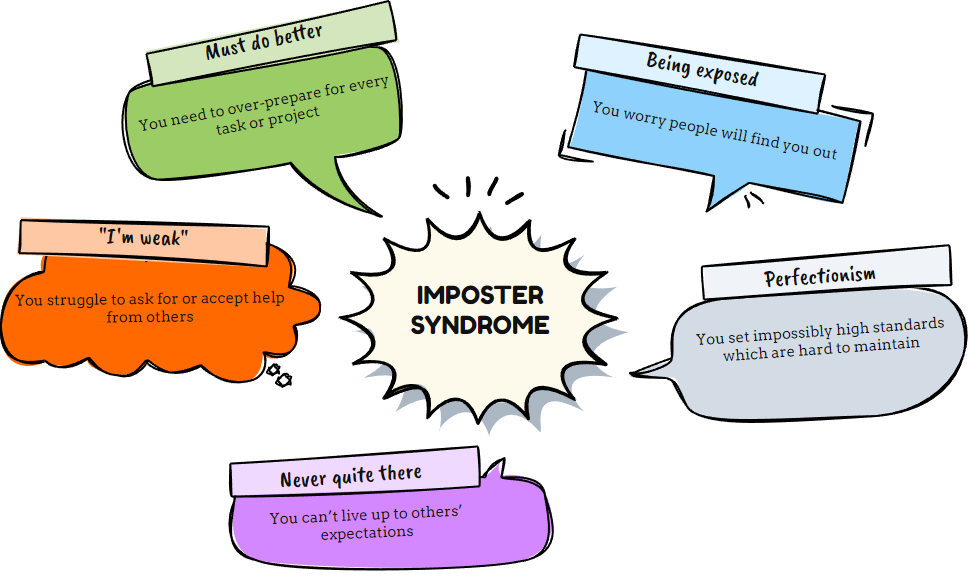
If any of the thoughts in the above diagram sound familiar, you may be experiencing Imposter Syndrome. When faced with a task you might find yourself putting it off for as long as you can (procrastination) or spending hours making it perfect (over-preparation).
Procrastination is a short-term ‘solution’ which often leaves you questioning your abilities, wondering why you couldn’t finish the task earlier. You may also view any success as a fluke that you “got away with”.
Over-preparation often shows up as a need to put in more effort than others to get the same result… if you can’t maintain the effort, you’ll be found out as a fraud.
You may also find yourself worrying that you won’t live up to others’ expectations. This can be caused by a fear of failure OR a fear of success. If you fail, it proves you were 0ver-rated all along. If you succeed, people will expect even more of you.
The term Imposter Phenomenon (also known as Imposter Syndrome) was developed by psychologists Dr Pauline Rose Clance and the late Dr Suzanne Imes.
They found it to be a common pattern, especially in women, often occurring in high-pressure professional, healthcare and academic settings. It can, however, show up anywhere – personally, in family roles or socially,